


Exploring Symbolism in “The Lottery” Through Interactive Hotspots
Designing meaningful online learning experiences has become a natural part of my teaching as a virtual middle school educator. For this module, I created an interactive learning object that supplements the VR and AR work I proposed in Module 7. The goal was to design something that students could use before or after an immersive experience to strengthen comprehension skills, build background knowledge, and support deeper discussion. I chose to use H5P’s Interactive Image tool because it allows students to click through different pins or hotspots on image and explore questions that encourage critical thinking. This format is accessible, engaging, and well-suited to a virtual environment because everything is done right on the screen.
Learning Objective
The learning objective for this activity is for students to identify and analyze symbolism and foreshadowing in Shirley Jackson’s “The Lottery.” By interacting with different elements in the image, students will connect visual details to key themes in the story. This aligns with our literature standards in ELA and supports the type of immersive cultural learning I described in my VR and AR proposal.
Content for the Learning Objective

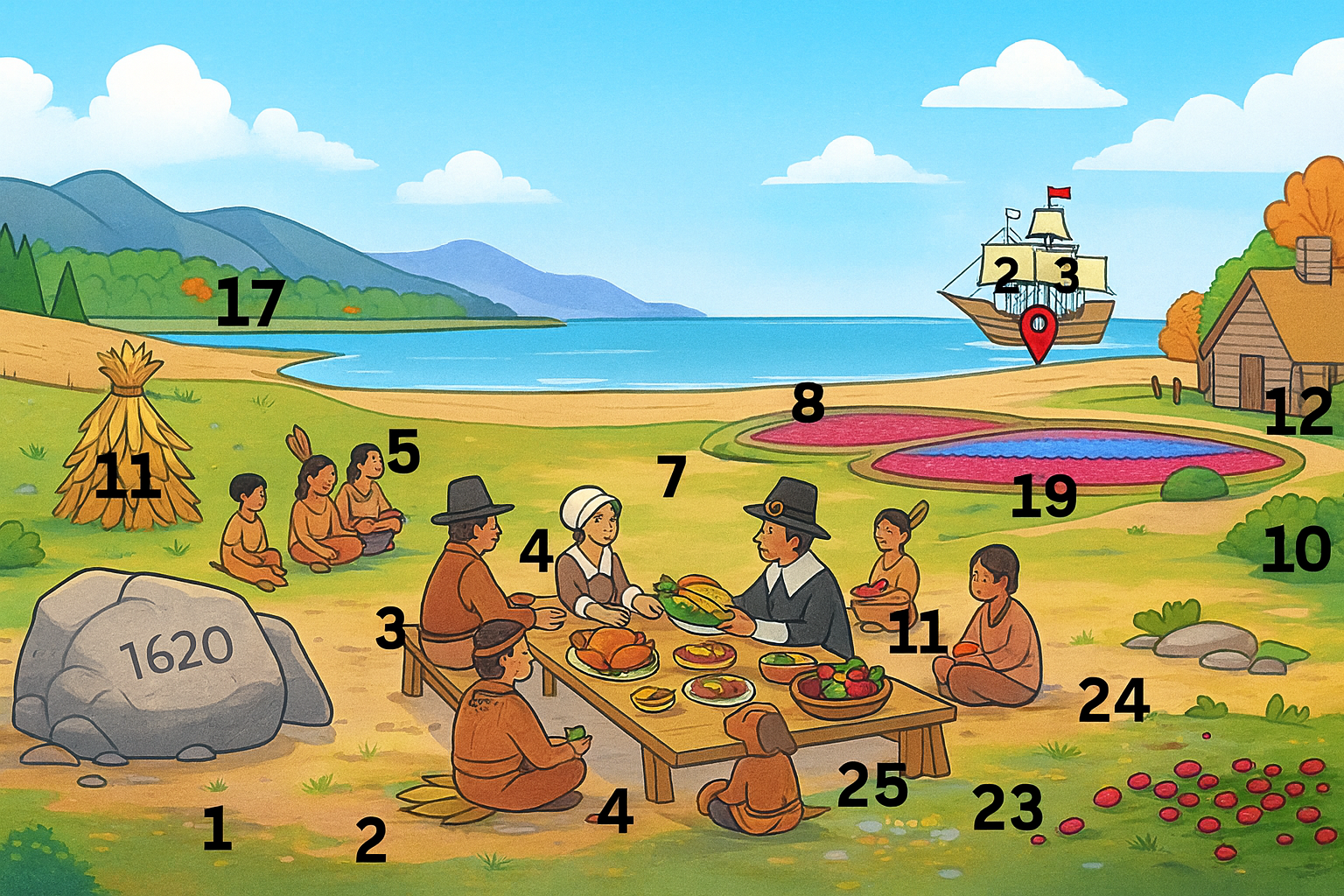
For this activity, students click through seven hotspots placed on an illustrated scene from “The Lottery.” Each hotspot asks a guiding question about a symbolic or important moment connected to the text. The hotspots are centered on the black box, the boys collecting stones, the crowd forming a circle, the calm sunny setting, the host of The Lottery Mr Summers and the young boy in the front who represents Davy Hutchinson. These details help students think about how Jackson builds tension and highlights the danger of blindly following tradition. Students can work independently and type short responses to at least three hotspots or work in pairs inside breakout rooms where one student writes notes during a brief discussion. This flexibility keeps the activity accessible for all learners.

Interactivity, Accessibility, and Engagement
This activity is interactive because students click, read, and respond within the same screen. It is accessible for virtual learners because it works on a computer, Chromebook, or tablet. It is engaging because students get to explore symbolic clues visually instead of only reading about them. The reusable design means I can modify the questions or replace the image when teaching a different text. Research supports the value of learning objects that allow students to manipulate content, engage in active learning, and revisit core concepts during instruction (Santos et al., 2022). This aligns with evidence-based recommendations for designing engaging learning experiences, such as those highlighted in the WWC practice guide (Graham et al., 2019). This activity brings those ideas into practice in a simple way that fits the needs of my online classroom
Design Tool Consideration
When selecting a design tool for this learning object, I wanted something that would be interactive, accessible for my virtual learners, and easy to reuse in different lessons. I also needed a platform that would allow students to explore content at their own pace, since my students log in from home and often have different levels of tech reliability. After reviewing different options, I chose H5P because it offers simple tools for creating interactive activities without needing any advanced design skills. The hotspot feature was especially appealing because it lets students click directly on parts of an image to explore key details and build background knowledge, which supports comprehension for a story like The Lottery. H5P also works well across devices, and I can embed the activity into Schoology or share it through a direct link, which makes it practical for virtual instruction. Overall, H5P provided the right balance of flexibility, ease of use, and meaningful interaction.

Click Here to View the Interactive Discussion
I am excited to use this learning object with my eighth graders because it gives them a chance to interact with literature in a more visual and meaningful way. Even in a virtual environment, they can explore a story’s symbolism together and build stronger comprehension through discussion and reflection.
References
Graham, S., Bollinger, A., Booth Olson, C., D’Aoust, C., MacArthur, C., McCutchen, D., & Olinghouse, N. (2016). Teaching secondary students to write effectively (NCEE 2017-4002). National Center for Education Evaluation and Regional Assistance (NCEE), Institute of Education Sciences, U.S. Department of Education. https://ies.ed.gov/ncee/wwc/Docs/PracticeGuide/wwc_secondary_writing_110116.pdf
Santos, J., Melaré, A., & Lobo, M. (2022). Learning objects and instructional design in digital learning environments. Education and Information Technologies, 27(3), 3519–3537. https://doi.org/10.1007/s10639-021-10846-y
Leave a Reply